Quick Background and Purpose
The Freight Rail Index (FRI), published by the Association of American Railroads (AAR), tracks seasonally adjusted intermodal shipments plus carloads excluding coal and grain. It is designed to be a snapshot of the most economically sensitive freight movements in the rail sector.
In August 2025, the FRI declined 0.5% from July. This marked the fourth drop in the past five months. While modest, these moves carry important signals for shippers.
Key 2025 Movements
-
May 2025: FRI fell 3.2% compared to April.
-
July 2025: FRI climbed 4.0% compared to June, the strongest monthly gain of the year.
-
August 2025: FRI dipped again, down 0.5% from July.
Even with these fluctuations, the index remains relatively strong by historical standards. Since 2008, it has been higher than the August 2025 value less than 15% of the time.
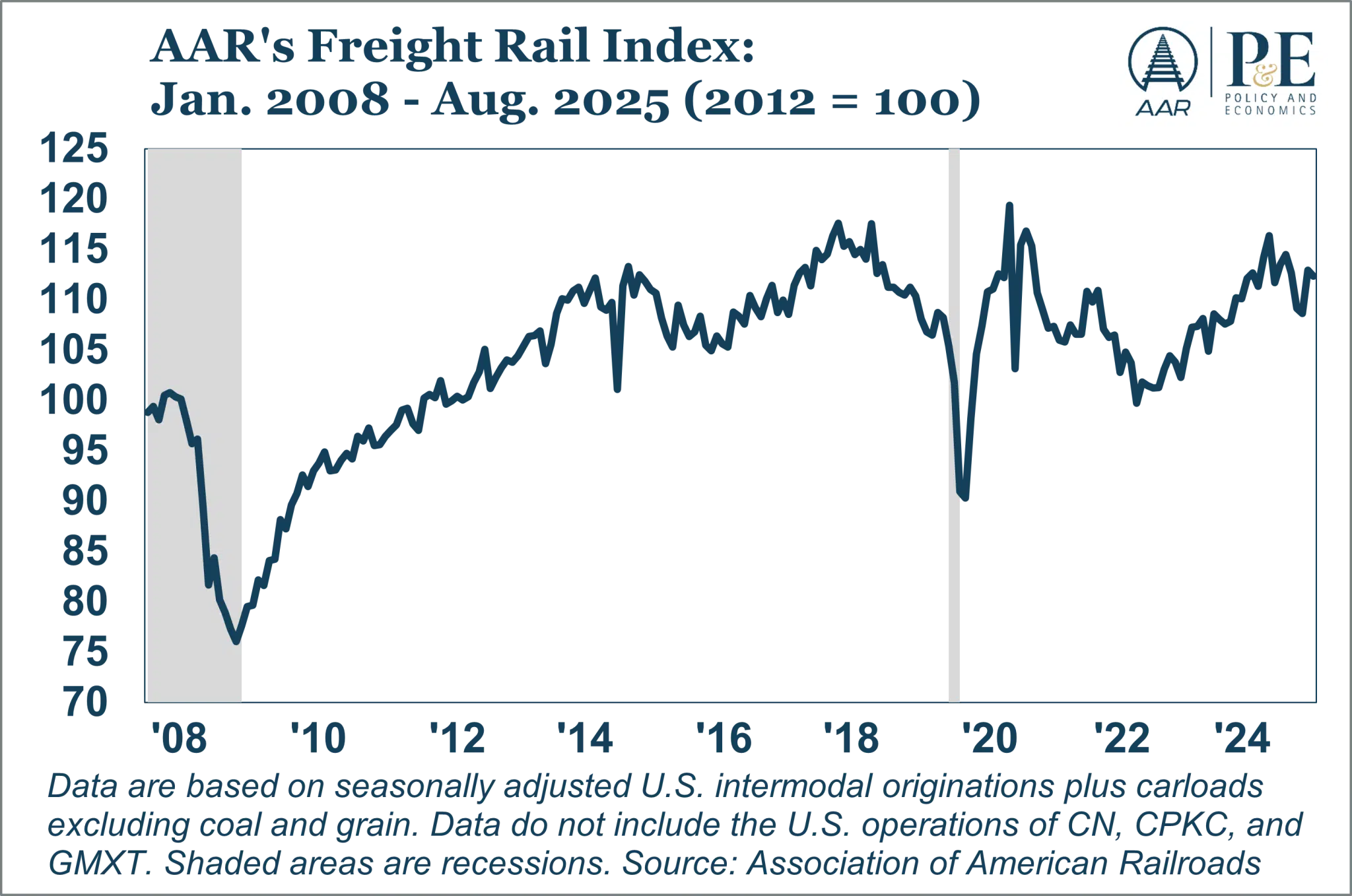
(Source: AAR RIO September 2025) -https://www.aar.org/fri-technical-note/
Why It Matters Now
Softening in the index suggests easing capacity pressures, which can:
-
Give shippers more leverage in rate discussions.
-
Improve equipment availability and scheduling flexibility.
-
Provide opportunities to negotiate better terms if volume trends continue to level off.
At the same time, railroads are facing higher input costs in fuel, labor, and maintenance. That means carriers may hold firm on base rates even as demand cools, pushing costs back to shippers through surcharges or limited service premiums.
Industry Context and What Is Accelerating
-
Economic signals are mixed: Manufacturing remains sluggish, though new orders hint at potential recovery. Consumer services are still expanding.
-
Rail traffic shows resilience: Total carloads rose 0.7% year-over-year in August, marking six straight months of gains.
-
Intermodal demand remains steady: Up 0.5% year-over-year in August, the highest monthly volume since May 2021.
These trends suggest shippers should not assume rate relief will be automatic. Market volatility will continue, and railroads will balance demand with cost recovery.
Bottom Line
The FRI is more than a statistic. It is a market signal that can guide your planning. Operators who watch the index closely can better time rate negotiations, equipment decisions, and budget forecasts.
Call to Action
-
Audit your contracts and lanes to see where volume softness may give you leverage.
-
Engage carriers early to secure competitive pricing before demand rebounds.
-
Stay alert to monthly FRI updates to adjust quickly as market dynamics shift.
That’s all for this week! Thank you for being part of the rail community and for keeping freight and the future moving.
Author: Jennifer Winter

Responses